Physical Address
304 North Cardinal St.
Dorchester Center, MA 02124
Physical Address
304 North Cardinal St.
Dorchester Center, MA 02124
Are you tired of being burnt out? Are you tired of feeling like you have to work long hours to be successful? Are you tired of the lies that hustle culture has been telling you about being discipline? If you answered yes to any of the questions, if not all, the truth is you’re not alone. Hustle culture has given us a false definition of what discipline truly is. So, let’s redefine true discipline and how soft women build unbreakable discipline.
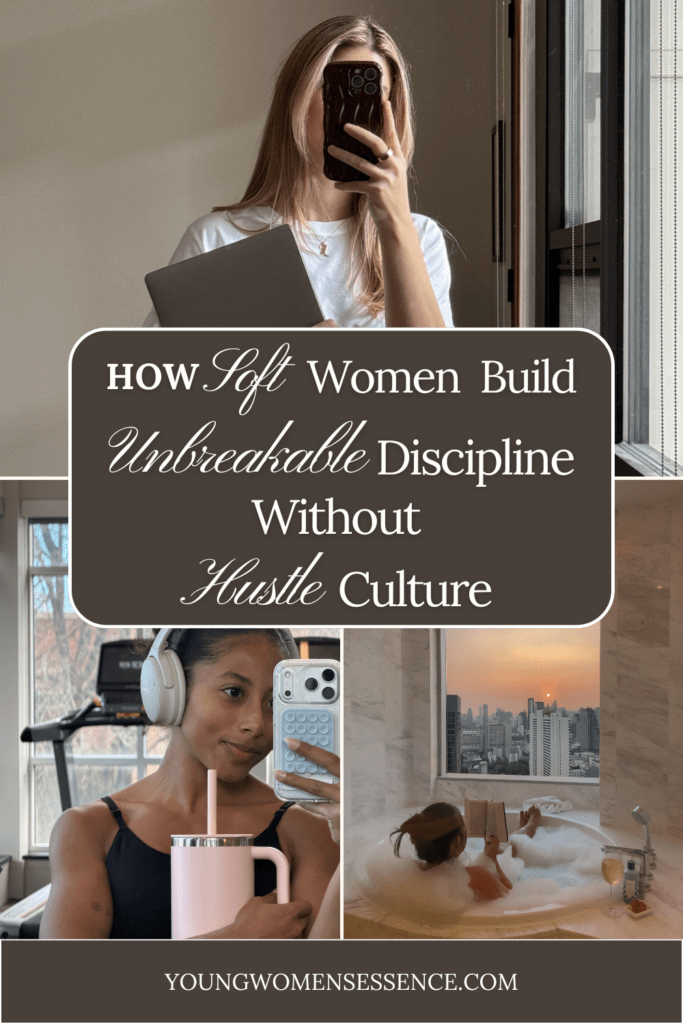
According to hustle culture, we were taught that discipline should be rigorous. We were taught that if we weren’t struggling, waking up at 4 a.m. in the morning, pushing through tiredness and burnout, then we don’t have what it takes to succeed.
However, this isn’t discipline; this is self-punishment. The definition of discipline sold to us by hustle culture isn’t sustainable.
The truth is, we don’t need to wake up at 4 a.m. in the morning, run in the freezing weather, and keep working, even though we’re mentally exhausted, to be successful. This type of “discipline” can lead to procrastination and quitting altogether.
Real discipline is honoring ourselves. It should feel supportive and work for us instead of against us. Real discipline shouldn’t feel like self-bullying or self-abuse.
Furthermore, real discipline consists of rest, honoring our emotions, and being in sync with our lives.
It is an act of love to our future selves in who we want to become.
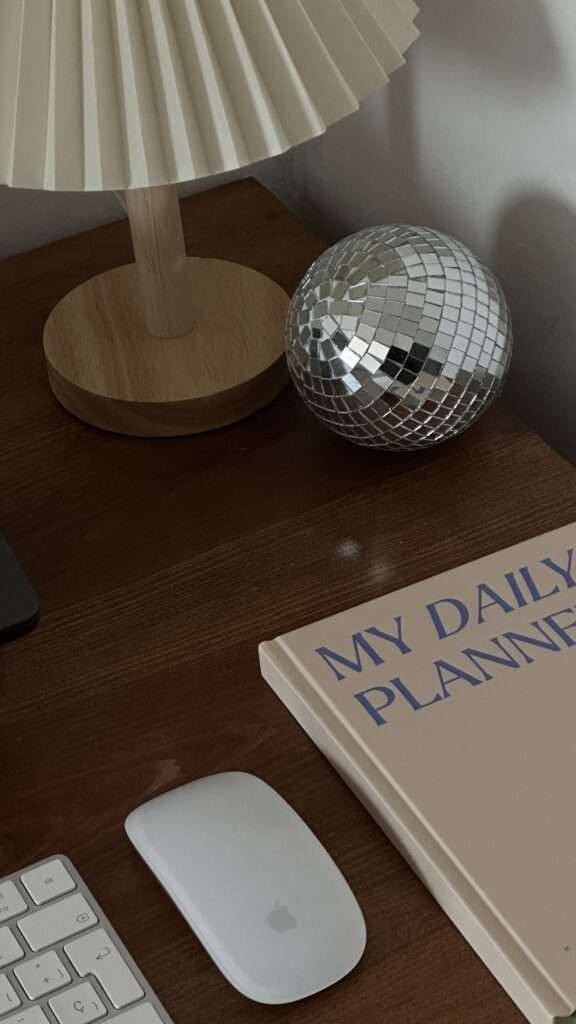
The truth is, to build unbreakable discipline like soft women, you need to ditch willpower and start creating systems. Women who have self-discipline know that willpower is unreliable for accomplishing their goals because it fluctuates.
Your willpower has mood swings; it can be up one day and down the other. It can change based on how you slept, if you eat well, and whether you’re stressed. Don’t let willpower be the source of your motivation. Relying on willpower is like relying on a phone that is on 1% to keep running throughout the day. Your willpower will eventually run out, and you will more than likely not stick to your plan.
As a result, you would rather scroll on social media than finish your end-of-term paper or go for some ice cream than go for a run.
This is where creating systems is needed.
Women who are disciplined aren’t different than any of us; they just create systems that make their goals achievable.
Creating systems means making decisions ahead of time before a given situation arises. For instance, having about 7 to 10 repeated meals to reduce the time spent trying to figure out what to eat for breakfast, lunch, or dinner each day or pre-deciding your outfits for the week saving you time when getting ready for work and having to decide what to wear each morning. This isn’t to be boring but to create structure in your life by making decisions ahead of time and relying less on willpower.
Moreover, discipline works best when your environment is designed to work for you rather than work against you. When you have your workout clothes laid out on your bed, you are more likely to go for a workout. When your fridge and pantry are filled with healthy food, you are more likely to eat healthy. The fewer roadblocks you have, the easier discipline will become for you.
Creating systems will lead you in the right direction and make hustle culture non-existent for you.

Today, Gen Z hustle culture teaches us that consistency is rigid. That we should wake up every day at the same time, have the same energy, and show up every day the same. This isn’t consistency. Eventually, we will become burned out and discourage causing us to give up because we’re human, not robots. This isn’t how humans operate, or live life for that matter.
So, ditch hustle culture’s version of staying consistent and do what women who live a soft, disciplined life do, anchor it.
Anchoring consistency is making it work for you, not forcing it, but attaching it to something (such as a habit or routine) that already exist in your life instead of starting from scratch.
So, instead of telling yourself you’ll listen to a chapter of an audiobook a day, anchor it by listening to it whilst you go on your hot girl evening walks. Instead of saying you’ll work on a project you’ve been meaning to start for 30 minutes in the morning, anchor it by working on it when you go on your morning cafe runs. This makes consistency stick and creating a natural flow in your life.
Our brains love familiarity. Our brain will associate these actions as normal overtime which creates consistency leading to unbreakable discipline.
Moreover, in his book, Atomic Habits, James Clear taught us that we are more likely to stick with a habit or behavior when it is paired with another habit that we already do (Clear, J., 2020). This is called Habit Stacking.
When a habit or routine is tied to another that already exists, we rely less on willpower and motivation because it becomes automatic in our lives and therefore creating consistency.
Oftentimes, you might mistake your ‘lack of discipline’ as a discipline problem, but have you ever thought it can be an emotional regulation problem?
The truth is, you don’t lack discipline, but maybe you’re just emotionally overloaded, stressed, or burned out. These emotions can put the brain into a fight-or-flight state that can become emotionally exhausting.
From a psychological standpoint, the part of our brain that is responsible for planning, decision-making, focus, and problem-solving, known as the prefrontal cortex, shuts down when under pressure, whilst the part of our brain that is called the amygdala takes over, resulting in us procrastinating than working on our goals (LeWine, Howard E. 2024). In other words, when we’re emotionally unregulated, our brains avoid doing the hard things. This makes being disciplined harder.
To build unbreakable discipline, regulating your emotions is important. Understand the states you are operating in instead of wondering why you can’t do something. Doing simple emotional regulation exercises can improve your discipline. For instance, taking a five-minute walk, journaling, meditating for three minutes, or even letting it all out by crying.
When you are operating from a place of calmness and clarity, it is easier to take action because your brain is cooperative.
Being busy isn’t a part of your personality, and being exhausted isn’t a flex. In fact, it is self-punishment. Hustle culture romanticizes this unhealthy way of discipline. Working long hours. Barely getting any sleep. Pushing past your exhaustion.
Instead let’s promote soft discipline by romanticizing structure. Structure is moving throughout your day with intention, flow, and clarity. It is the invisible support system that we never knew we needed. Structure turns productivity from chaos to peace. You will know what you have to do, what time to do it, and when to stop doing it.
Moreover, structure will help you protect your energy and time, which creates space for you to spend time with family, indulge in self-care, and partake in other passions.
You can romanticize structure by having slow mornings, a short to-do list with a few priorities, and self-care rituals. Having structure will not only keep you grounded but also create unbreakable discipline in your life.
When you have an identity-based discipline, it will feel more natural than forced. Therefore, creating unbreakable discipline.
Women who create identity-based discipline ask themselves, ‘What type of woman do I want to become?’ They start to act and think like that woman and ignore anything else that doesn’t define who she is becoming.
Studies on self-perception theory tell us that when we view ourselves as a certain person, we begin to act like that person (Bem, D. 1972). Therefore, repeatedly viewing yourself as the person you want to become will make you subconsciously start acting like that person.
Hence, you will no longer be relying on motivation to become your dream woman, but on self-perception.
So, instead of saying, ‘I want to be more disciplined, say, ‘I am a woman who has soft, unbreakable discipline, I always follow through and accomplish everything I put my mind to.’
When discipline is rooted in an identity, it is easy to stick with. Therefore, becoming unbreakable.

The biggest mistake we make is using discipline as a means to transform our lives overnight. Suddenly, we want to wake up early, start going to the gym, eat healthy, read daily, etc., all at once. This can result in an overwhelming feeling and eventually quitting.
This is not how discipline works; we can’t change our lives overnight. The goal to build unbreakable discipline is to perfect one habit at a time.
Imagine how many habits you’ll master if you focus on one at a time.
Ask yourself, ‘What habit can I develop that’ll have the biggest impact on my life right now?’ Then, commit to developing that one habit.
Committing to one habit will help you build confidence, consistency, and most of all discipline.
If your habit requires too much motivation or willpower, this is not operating from a place of soft discipline. Furthermore, your habit will feel more like a chore than a part of your lifestyle.
Gen Z hustle culture taught us that we should just ‘push through,’ but real discipline teaches us that we can make our habits lighter.
If your goal is to start reading books, start with one page. If your goal is to start working out, start with 5 minutes. Make your habits so simple that you find it almost embarrassing to do.
Moreover, your habits will feel like something you can achieve rather than intimidating. Your small actions done consistently will compound overtime and worth more than your big actions done occasionally.

Instead of making your habit something you “should” do, attach your habit to the woman you want to become. Make your habit identity based as stated above. This will make you stick to the habit. For instance, instead of exercising being a habit you “should” do to stay fit, attach it to your identity; a woman who prioritizes her health.
Your structure should feel supportive, not like punishment. Create a structure that is flexible, instead of being strict.
Creating a gentle structure gives your day more direction and intentionality. You won’t have to start a day doing random things but rather focus on the things that matter.
Creating structure can be having a short and simple to-do list with one to three top priorities, planning time to rest and self-care throughout the day.
Having structure allows discipline to become sustainable in your life.
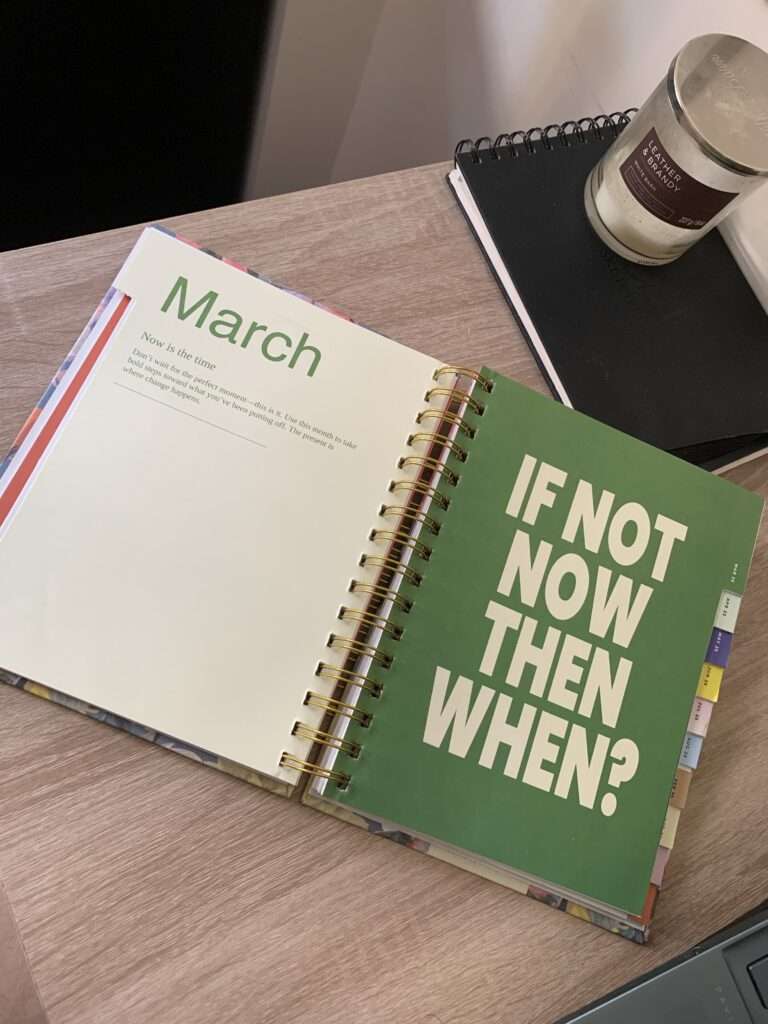
Women who possess soft, unbreakable discipline use tracking their progress as a means to improve their performance and awareness, not to self-criticize.
Whether you use a habit tracker, to-do list, or notes, this can be useful data for you to analyze what’s working and what isn’t.
So, instead of beating yourself up about a bad day or week, use that data to your advantage. Ask yourself, ‘What was the cause?’
You will start to see patterns that’ll help you improve your energy, schedule, and emotions.

Rest is essential when building discipline. Therefore, take time to intentionally rest. You shouldn’t think of rest as something you should earn, but something that is needed.
When you rest, it allows you to recharge and stay consistent, which promotes discipline and reduces burnout because we’re trying to stay burnout-free over here, ok.
The trick to resting on purpose is to include it in your routine. It can be slow mornings, reset days, or a 20-minute nap.

To wrap it all up in a bow, how you talk to yourself matters more than anything. If you beat yourself up, talk down on yourself, or self-judge, you will more than likely not become the discipline woman you want to become. Sorry for breaking the news to you. How you treat and talk to yourself determines if you’ll build unbreakable discipline.
Instead of telling yourself that you’re bad at a new habit, tell yourself that you’re learning and will eventually master it. Show yourself more empathy because building discipline that lasts depends on it.
True discipline isn’t about a rigid routine, waking up the same time each morning, or going for a run in the cold weather. True discipline is flow, softness, and is in sync with your life. For many years, hustle culture has taught us that discipline has to be hard in order for us to succeed. However, we are breaking free from these lies and redefining what discipline truly is: soft, gentle, and aligned.
Psst…Yes, you! If this article helped you consider liking and sharing it with someone it might help or share it on your social media pages. Until next time, Ciao!